The Hidden Costs of Manual Data Entry (And How to Eliminate Them)
 Admin4 min read
Manual data entry may appear inexpensive, but it silently drains productivity, increases errors, and slows financial operations. This article exposes the hidden costs of manual data entry in accounting and explains how AI-powered document automation eliminates inefficiencies at scale.
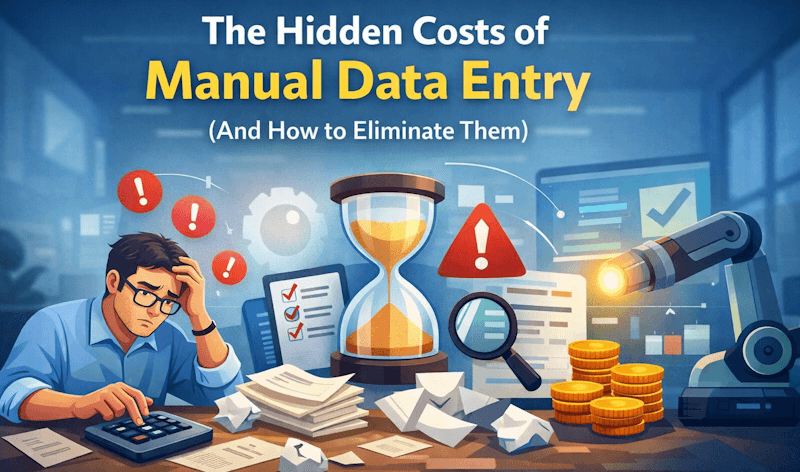
Introduction
Manual data entry has been part of accounting workflows for decades. From typing invoice totals into accounting systems to copying expense values from receipts, finance teams rely heavily on human effort to move data from documents into software.
At first glance, this approach seems manageable and low cost. However, as transaction volumes increase, the inefficiencies begin to surface. Manual data entry quietly affects accuracy, reporting speed, and compliance readiness—problems frequently discussed in accounting automation guides published on the DocuNero blog.
As businesses scale, manual data entry becomes a bottleneck. In this article, we explore the hidden costs of manual data entry and explain how modern solutions such as AI-powered invoice processing and intelligent document OCR help eliminate these issues.
The true hidden costs of manual data entry
1) Time loss that compounds every month
Manual data entry is one of the most time-consuming activities in accounting. Entering supplier details, tax values, and invoice totals may take only minutes per document, but over weeks and months, the hours add up significantly.
This lost time directly impacts productivity and delays strategic work such as forecasting and cash-flow planning. Businesses evaluating efficiency gains often start by reviewing automation capabilities highlighted on the DocuNero features overview.
By replacing typing with automation through automated invoice data extraction, teams significantly reduce processing time and free up capacity for higher-value tasks.
2) Human error and expensive rework
Manual data entry is prone to error. Transposed digits, missing decimals, or incorrect tax codes can easily slip through, only to be discovered during reconciliation or audits.
Correcting these mistakes requires additional investigation and rework, increasing operational costs.
Using AI-driven OCR reduces these risks by extracting data consistently and presenting it in a structured, review-ready format.
3) Slower month-end close and delayed reporting
Manual entry creates bottlenecks during month-end and quarter-end close. When teams are still entering data, reconciliations are delayed and leadership lacks timely financial insight.
Organizations looking to shorten close cycles frequently explore automation options outlined on the DocuNero pricing page, where scalable processing aligns with growing document volumes.
Automating intake with batch document uploads enables teams to process large volumes simultaneously, accelerating the close process.
4) Compliance and audit exposure
Manual workflows make it difficult to maintain consistent documentation and traceability. Missing approvals, inconsistent categorization, or undocumented edits increase audit risk.
Many finance teams turn to guidance provided in the DocuNero Help Center to establish better controls and reduce compliance exposure.
Implementing approval workflows ensures every document follows a clear review path and supports audit readiness.
5) Limited scalability as the business grows
Manual data entry does not scale efficiently. As invoice and receipt volumes increase, businesses often respond by adding headcount, which increases costs without improving speed or accuracy.
Automating document capture using AI receipt processing allows organizations to scale operations without proportionally increasing staffing costs.
6) Employee fatigue and reduced morale
Repetitive data entry leads to fatigue and disengagement. Skilled accounting professionals spend more time typing than analyzing, which can impact morale and retention.
The financial impact of poor data quality
Manual data entry is a major contributor to poor data quality. Inaccurate or inconsistent data affects reporting, forecasting, compliance, and decision-making.
Industry research highlights the financial impact of unreliable data. According to IBM, organizations lose billions each year due to inefficiencies and rework caused by poor data quality (IBM data quality overview).
How automation eliminates manual data entry
Modern accounting automation replaces repetitive typing with intelligent extraction. AI reads invoices and receipts, identifies key fields, and converts documents into structured, usable data.
How DocuNero removes manual data entry from accounting workflows
DocuNero is designed to eliminate manual data entry across the entire document lifecycle. Invoices and receipts are captured using AI, structured data is extracted automatically, and teams can review records before exporting them.
With features such as invoice automation, advanced OCR, batch processing, receipt automation, and approval controls, DocuNero replaces manual effort with scalable, reliable workflows.
Conclusion
The hidden costs of manual data entry extend far beyond wages. Lost time, frequent errors, delayed reporting, compliance risks, and employee burnout quietly erode productivity and profitability.
By eliminating manual entry with AI invoice processing and automated receipt capture, accounting teams gain speed, accuracy, and scalability without increasing headcount.
Ready to get started with DocuNero?
Join thousands of users who trust us to automate their invoices and receipts with AI.
Start Free with DocuNeroAdmin
Admin at DocuNero, helping users simplify invoice and receipt processing through AI-powered automation.
View all posts by AdminRelated Posts
When Should You Use Batch Processing for Invoices & Receipts?
Learn when batch processing for invoices and receipts makes sense, how it improves productivity, and how AI-powered tools like DocuNero streamline high-volume financial workflows.
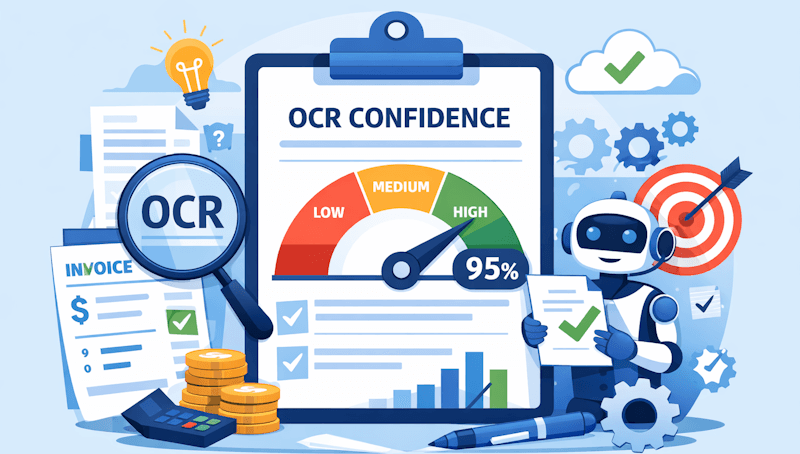
What Is Document OCR Confidence and How to Improve It?
OCR confidence determines how reliable your extracted document data really is. Learn what OCR confidence means, why it matters for productivity, and proven ways to improve accuracy in invoice and receipt processing.